Website Thinking: How Business Owners See It Differently
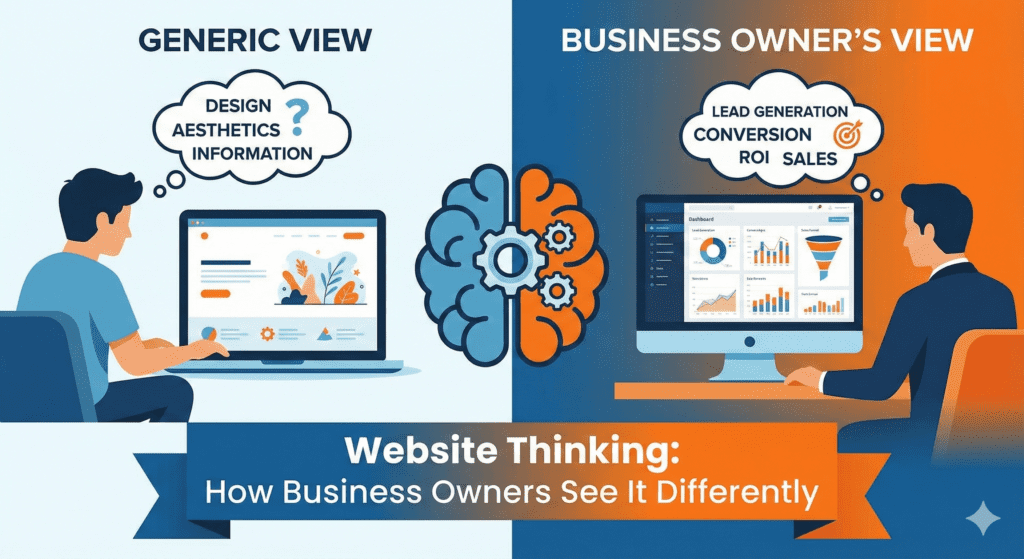
How Business Owners Should Think About Their Website (Not Developers)
Many business owners make a critical mistake: they let developers dictate their website strategy. But successful website thinking is about viewing your website as a powerful business tool, not just a technical project. It’s about understanding how it contributes to your bottom line. This article explains how you, as a business owner, should approach your website to maximize its impact.
Stop Thinking Features, Start Thinking Goals
Developers are often focused on the technical aspects of a website: coding, functionality, and the latest technology. While these are important, they shouldn’t be the primary focus. Business owners need to shift their website thinking to focus on business goals. What do you want your website to achieve?
- Generate leads
- Drive sales
- Improve customer service
- Build brand awareness
Once you define your goals, you can work backward to determine the features and design needed to achieve them.
User Experience (UX) is King (and Queen)
A beautiful website is useless if users can’t easily find what they need. Therefore, UX is vital for business success. Think about your target audience:
- What are they looking for?
- How can you make their experience as smooth and intuitive as possible?
- How can you ensure your website offers a seamless and valuable journey?
Focus on creating a user-friendly website that provides value to your visitors. Good UX leads to higher conversion rates and increased customer loyalty.
Website Navigation and Information Architecture
Consider how easily users can navigate your website. Clear and logical navigation is essential for a positive user experience. Think about the information architecture: how is your content organized? Is it easy for users to find what they need? Use tools like heatmaps to see how users are interacting with your website.
Website Strategy: Understanding Your Numbers and ROI
Developers may not be focused on metrics, but as a business owner, you should be obsessed with them. Track your website traffic, conversion rates, bounce rates, and other key performance indicators (KPIs). Then you can measure the effectiveness of your website and identify areas for improvement.
Understanding your ROI (Return on Investment) is critical. Is your website generating enough revenue to justify the investment? If not, you need to adjust your strategy.
SEO is Your Friend, Not Your Enemy
Search engine optimization (SEO) is not a one-time task; it’s an ongoing process. It’s about ensuring your website is visible to your target audience on search engines like Google. Don’t leave SEO solely to your developers. Learn the basics and actively participate in the process. This can include:
- Keyword research
- Content optimization
- Link building
Content is King (and Queen, Too!)
High-quality, engaging content is essential for attracting and retaining website visitors. Publish blog posts, articles, videos, and other types of content that provide value to your target audience. This will not only attract more visitors but also improve your SEO.
Mobile-First Mindset
In today’s mobile-first world, it’s crucial to ensure your website is responsive and looks great on all devices. Test your website on different smartphones and tablets to ensure a seamless user experience. Google also prioritizes mobile-first indexing, so a mobile-friendly website is essential for SEO.
Frequently Asked Questions (FAQ) about Website Thinking
Here are some frequently asked questions to help you better understand website thinking.
Conclusion: Embrace a Strategic Approach to Your Website
Ultimately, successful website thinking requires a shift in perspective. As a business owner, you need to view your website as a strategic asset that can drive growth and achieve your business goals. By focusing on user experience, metrics, and SEO, you can create a website that delivers real results. So, transform your business today by embracing effective website thinking!
Ready to take control of your website and turn it into a powerful business tool? Contact us today for a free consultation and let us help you develop a website strategy that delivers results! (Call To Action)
Internal Link Opportunities: Link the phrases “lead generation”, “SEO” and “website traffic” to other related pages on the blog. Boost Website ROI: Understand & Optimize Your Returns
