Why Most Websites Fail in the First 90 Days: A Survival…
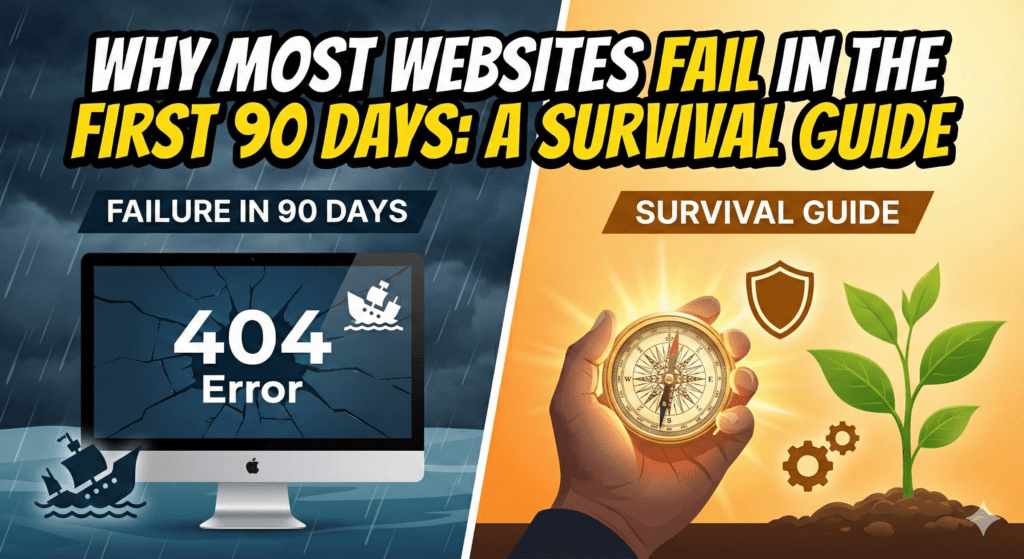
Why Most Websites Fail in the First 90 Days: A Survival Guide
Launching a website is exciting, but the truth is, many new sites experience website failure within the first 90 days. The reasons range from poor planning to neglecting essential marketing efforts. This article dives into the common pitfalls that lead to website failure and provides actionable steps to build a thriving online presence.
Lack of a Clear Strategy and Goals
One of the biggest reasons for website failure is the absence of a well-defined strategy. Before even considering design, ask yourself: What are your goals? Who is your target audience? What problem are you solving?
- Without clear goals, you have no way to measure success.
- A vague understanding of your audience leads to irrelevant content.
- A poorly defined purpose leaves visitors confused and disengaged.
Consequently, document a detailed business plan before your website even goes live to minimize these risks.
Neglecting Search Engine Optimization (SEO)
SEO isn’t just a buzzword; it’s critical for driving organic traffic. A visually stunning website is useless if no one can find it.
- Ignoring keyword research means your site won’t rank for relevant searches.
- Lack of optimized content makes your site invisible to search engines.
- Poor site structure hinders crawlability and indexability.
Therefore, make sure to plan your SEO strategy from the start. Conduct keyword research, optimize your content, and build a solid backlink profile.
How to Avoid SEO-Related Website Failure
Prioritize keyword research. Target long-tail keywords relevant to your niche. Moreover, consistently create high-quality, engaging content that provides value to your audience.
Poor User Experience (UX) Design
A clunky or confusing website will drive visitors away immediately. User experience (UX) is crucial for keeping visitors engaged and encouraging conversions.
- Slow loading times frustrate users.
- Difficult navigation makes it hard to find information.
- Mobile incompatibility alienates a significant portion of your audience.
Subsequently, prioritize a responsive design, streamlined navigation, and fast loading speeds. Use tools like Google’s PageSpeed Insights to identify and fix performance issues.
Insufficient Marketing and Promotion
Building it is only half the battle; you also need to make sure your target audience knows your website exists. Insufficient marketing is a common reason for website failure.
- Relying solely on organic traffic is often too slow.
- Ignoring social media limits your reach.
- Failing to build an email list means missing out on direct marketing opportunities.
As a result, implement a comprehensive marketing strategy that includes SEO, social media marketing, email marketing, and paid advertising.
Ignoring Analytics and Data
Tracking website performance is essential for identifying what’s working and what’s not. Ignoring analytics is like driving blindfolded.
- You won’t know which pages are popular.
- You won’t understand user behavior.
- You’ll miss opportunities for optimization.
Then, implement Google Analytics and regularly review your data. Monitor key metrics like traffic, bounce rate, conversion rates, and time on page. Use these insights to refine your strategy and improve your website’s performance.
Lack of Regular Updates and Maintenance
A static, outdated website sends the wrong message. Content requires updating and optimization.
- Outdated content makes your site look neglected.
- Security vulnerabilities put your site at risk.
- Broken links damage your credibility.
Therefore, create a content calendar and commit to regularly updating your website with fresh, relevant content. Furthermore, perform regular security audits and maintain your website’s software.
No Clear Call-to-Action
Visitors need to know what you want them to do. A lack of a clear call-to-action (CTA) results in missed opportunities.
- Visitors leave without taking action.
- You miss opportunities to generate leads.
- You fail to convert visitors into customers.
Correspondingly, use clear, compelling CTAs to guide visitors through your site. Use action-oriented language and make your CTAs visually prominent.
Conclusion: Preventing Website Failure and Achieving Success
Avoiding website failure requires proactive planning, consistent execution, and a commitment to continuous improvement. By addressing the common pitfalls outlined above, you can significantly increase your chances of building a thriving online presence. Don’t let your website become another statistic; invest the time and effort to ensure its long-term success.
Ready to avoid website failure? Contact us today for a free consultation and let us help you build a website that thrives!
FAQ: Website Failure
Here are some frequently asked questions about website failure:
- What is the most common cause of website failure?
The most common cause of website failure is a lack of clear strategy and defined goals before the website even launches.
- How can I prevent my website from experiencing website failure within the first 90 days?
Develop a comprehensive strategy that includes SEO, marketing, and a plan for ongoing maintenance.
- What role does SEO play in preventing website failure?
SEO is essential for driving organic traffic and ensuring your target audience can find your website.
- What are some signs that my website is heading towards website failure?
Low traffic, high bounce rates, and a lack of conversions are all warning signs.
- How often should I update my website to avoid website failure?
Update your website regularly with fresh, relevant content to keep visitors engaged. Aim for at least monthly updates.
- Is user experience important in preventing website failure?
Yes! A positive user experience is critical for keeping visitors engaged and encouraging conversions, leading to website success instead.
- What is a good way to promote your website and avoid website failure?
Combine SEO, social media marketing, email marketing, and paid advertising.
Website Audit: Boost Your Online Performance Now! Website Failure: Why Online Businesses Still Struggle Website Growth: Proven Strategies for Small Businesses Generic Websites: Why They Can't Compete & How to Fix Engagement Is the Key
