Freelancer vs Company: Scaling Software Development
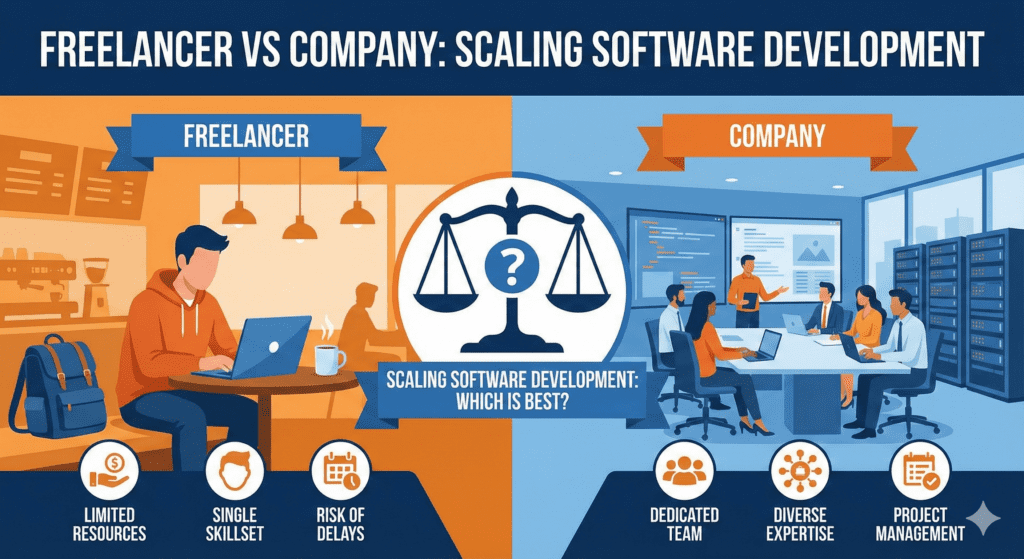
Freelancer vs Company for Software Development: What Scales Better?
When embarking on a software development project, a crucial decision arises: should you hire a software development freelancer or a software development company? While both options have their merits, understanding which choice provides better long-term scalability is vital for success.
Therefore, let’s dive into the pros and cons of each, focusing on how they handle growth, complexity, and evolving project needs to determine which option offers the best foundation for scalable software development.
Cost and Budget Considerations
Budget is often a primary driver. Generally, hiring a freelancer appears initially cheaper. Freelancers often have lower overhead, which translates to lower hourly rates. However, hidden costs can emerge if the project scope increases, or the freelancer isn’t available long-term.
Companies, on the other hand, typically have higher hourly rates due to their infrastructure, management, and employee benefits. Yet, their structured approach can lead to better cost predictability and potentially lower overall costs due to efficient project management and resource allocation. Ultimately, it’s crucial to consider both the immediate expense and the total cost of ownership.
Project Scope and Complexity
Smaller, well-defined projects often suit freelancers. They can quickly and efficiently deliver specific tasks. However, when project complexity grows, a single freelancer may struggle to manage the various aspects, leading to delays or compromised quality.
Companies excel in handling complex projects. They offer diverse teams with specialized skills, robust project management methodologies, and established quality assurance processes. They can handle intricate integrations, large datasets, and demanding performance requirements.
Handling Unexpected Project Changes
Adapting to changes is crucial. Freelancers may find it difficult to accommodate significant alterations in scope or features without impacting timelines and potentially increasing costs dramatically.
Companies, with their flexible resource allocation and defined change management procedures, are better equipped to manage unexpected changes efficiently. This ensures the project stays on track and within budget, contributing to scalable software development.
Availability and Reliability
A freelancer’s availability can be unpredictable. They may have other commitments, limited hours, or even become unavailable mid-project due to personal circumstances. This creates a risk to project continuity.
Companies offer greater reliability. They have multiple developers, backup resources, and established processes to ensure project continuity even if an individual team member becomes unavailable.
Long-Term Maintenance and Support
Freelancers might move on to other projects, leaving you without ongoing support or maintenance. Finding a replacement with the necessary knowledge of the project can be challenging and costly.
Companies typically provide long-term support and maintenance contracts, guaranteeing ongoing assistance and updates, ensuring the software remains functional and secure over time.
Communication and Collaboration
Communication with a freelancer often relies on direct one-on-one interaction. This can be efficient for simple projects but becomes challenging with larger teams or complex requirements.
Companies have structured communication channels, project managers, and collaborative tools that facilitate effective communication between all stakeholders. This streamlines workflow and minimizes misunderstandings, vital for successful scalable software development.
Control and Intellectual Property
Working with freelancers can sometimes lead to ambiguity regarding ownership of the code and intellectual property. Clearly defined contracts are essential but may not always be comprehensive.
Companies typically have clear agreements that assign ownership to the client, providing greater control over the intellectual property and safeguarding your investment.
Conclusion: Prioritizing Scalable Software Development
Choosing between a freelancer and a company for software development depends heavily on the project’s specific needs and long-term goals. While freelancers can be a cost-effective solution for small, straightforward projects, companies offer superior scalability, reliability, and support for complex or growing initiatives.
If your project requires future expansion, ongoing maintenance, or necessitates a team with diverse expertise, investing in a reputable software development company is the smarter move for achieving truly scalable software development.
FAQ about Scalable Software Development
1. What is scalable software development?
Scalable software development refers to the ability of a software application to handle increasing workloads and user demands without performance degradation or requiring significant code changes.
2. When is it better to hire a software development freelancer?
Freelancers are generally a good choice for small, well-defined projects with limited scope and minimal maintenance requirements.
3. What are the benefits of using a software development company for a scalable project?
Companies offer greater expertise, resources, project management, and long-term support, ensuring the software can adapt to future growth and complexity.
4. How does project management differ between freelancers and companies?
Freelancers often handle project management themselves, while companies have dedicated project managers and established methodologies for efficient execution.
5. How do I ensure my project is built for scalability?
Plan for future growth, use modular design principles, choose scalable technologies, and prioritize thorough testing. Partnering with experienced scalable software development experts is vital for success.
6. What happens if a freelancer becomes unavailable during a project?
This can lead to significant delays and require finding a replacement with project-specific knowledge, potentially incurring extra costs.
7. What kind of legal considerations need to be made when hiring a software development freelancer?
It is important to have clear contracts outlining project scope, deliverables, timelines, payment terms, and intellectual property ownership.
Call to Action:
Ready to build software that scales with your business? Contact us today for a free consultation and discover how our experienced team can help you achieve your development goals! [Link to Contact Us Page] Ensure Project Success | Professional Development Expertise Cheap Freelancers: Why They Cost You More Later Mission Critical Projects: Avoid Freelancer Risks! Freelancer vs. Company: Which Dev Choice is Best? Mobile App Project Failure: Freelancer Risks Revealed Complex Dev Projects: Why Not Freelancers? | Expert Insights Dev Agency vs Freelancer: Which is Best? Freelancer vs. Web Dev Company: Which is Best for You? Dev Company vs Freelancer: Which is Right for You? Freelancer vs Company: Which is Cheaper for Website Dev? Hire a Freelancer? Know When It's the Right Call Freelancer vs Website Company: Best Choice for Websites? Budget vs Premium Website: Which is Right for You? Node.js Deployment: Top Methods for VPS & Cloud Node.js Task Scheduling: Cron Jobs & Queues Made Easy API Development: CRUD, Pagination & Best Practices Guide Mobile Application Strategy Online Learning Through Educational Websites Complete Freelancer vs Company for Website Projects:…
