Complex Dev Projects: Why Not Freelancers? | Expert Insights
Why Businesses Avoid Freelancers for Complex Development Projects
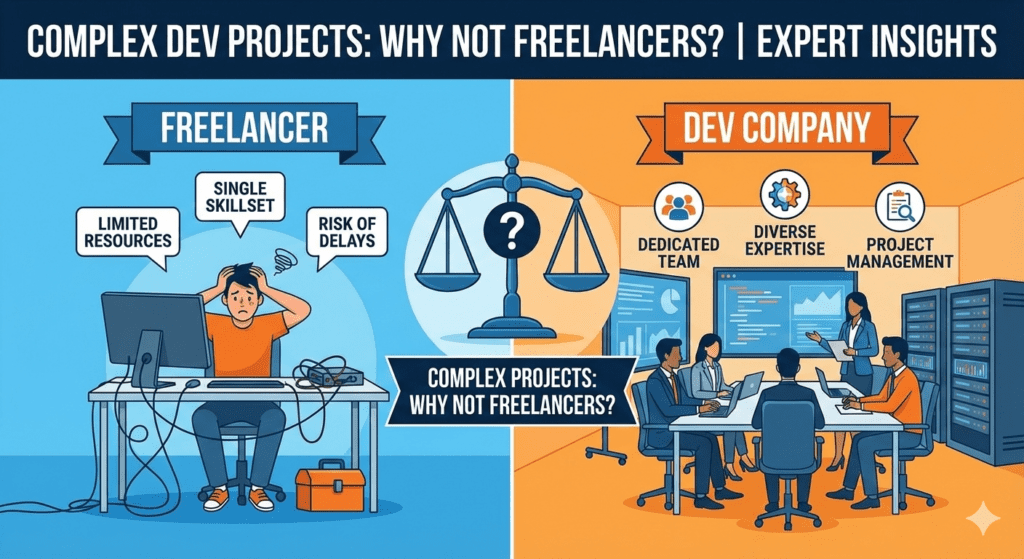
Many businesses consider freelance developers for various tasks. However, when it comes to complex development projects, they often hesitate. Why? This article explores the common reasons companies are wary of entrusting intricate software development to freelancers and what alternatives exist. It’s not about undervaluing freelancers, but understanding the nuances of large-scale projects.
Communication Challenges in Remote Collaboration
Effective communication is crucial in complex development projects. While many freelancers are excellent communicators, coordinating a team of freelancers across different time zones and communication styles can become a logistical nightmare. Misunderstandings can lead to costly delays and rework. It’s harder to build team cohesion and a shared understanding when everyone is operating independently.
- Lack of immediate access for urgent meetings.
- Potential language barriers hindering clear communication.
- Difficulties in establishing a consistent communication protocol.
Transition words like “while”, “however”, and “therefore” help guide the reader through these potential roadblocks.
The Risk of Scope Creep and Quality Control
Complex development projects are rarely static. Requirements often evolve, leading to scope creep. Managing scope creep effectively requires tight control and clear lines of authority. With a distributed team of freelancers, maintaining this level of control can be challenging. Furthermore, ensuring consistent code quality and adherence to coding standards across multiple developers can be difficult without a strong internal quality assurance process.
Maintaining Quality Assurance
Consistency in quality is critical. Without a unified development environment and standardized processes, integrating code from different freelancers can introduce bugs and inconsistencies. Companies often prefer in-house teams or dedicated agencies who have established quality control protocols.
Long-Term Maintenance and Support
What happens after the project is launched? Complex development projects often require ongoing maintenance and support. Relying solely on freelancers for long-term support can be risky. If a key freelancer becomes unavailable, finding a replacement who understands the intricacies of the project can be challenging and time-consuming. Establishing a long-term relationship with a reliable team offers more stability.
Legal and Security Considerations
Protecting intellectual property and sensitive data is paramount. Freelancers often operate as independent contractors, which can raise legal and security concerns. Establishing clear ownership of code and enforcing non-disclosure agreements can be more complex than with employees. Ensuring that all freelancers adhere to the same security protocols can also be a challenge.
Scalability and Team Dynamics
Complex development projects often require scaling the team up or down as needed. While freelancers offer flexibility, quickly assembling a cohesive team of freelancers with the necessary expertise can be challenging. In-house teams or established agencies can adapt more readily to changing project demands. Moreover, team dynamics and collaboration are often smoother within a dedicated team environment.
Alternatives to Freelancers for Complex Projects
Consider these options if you’re hesitant about using freelancers:
- Software Development Agencies: Offer a dedicated team and structured development process.
- In-House Development Teams: Provide greater control and better integration with existing systems.
- Hybrid Approach: Combining in-house staff with specialized freelancers for specific tasks.
These alternatives often provide the security and scalability necessary for larger, more intricate projects.
Conclusion: Weighing the Risks and Rewards for Complex Development Projects
Ultimately, the decision to use freelancers for complex development projects depends on the specific project requirements, the company’s internal capabilities, and risk tolerance. While freelancers offer cost-effectiveness and specialized skills, the potential challenges in communication, quality control, and long-term support often lead businesses to explore alternative solutions that offer greater stability and control.
FAQ About Freelancers and Complex Development Projects
Here are some frequently asked questions about using freelance developers for complex software projects.
Ready to explore alternative solutions for your complex development needs? Contact us today for a free consultation! Mission Critical Projects: Avoid Freelancer Risks! Mobile App Project Failure: Freelancer Risks Revealed Hire a Freelancer? Know When It's the Right Call
