
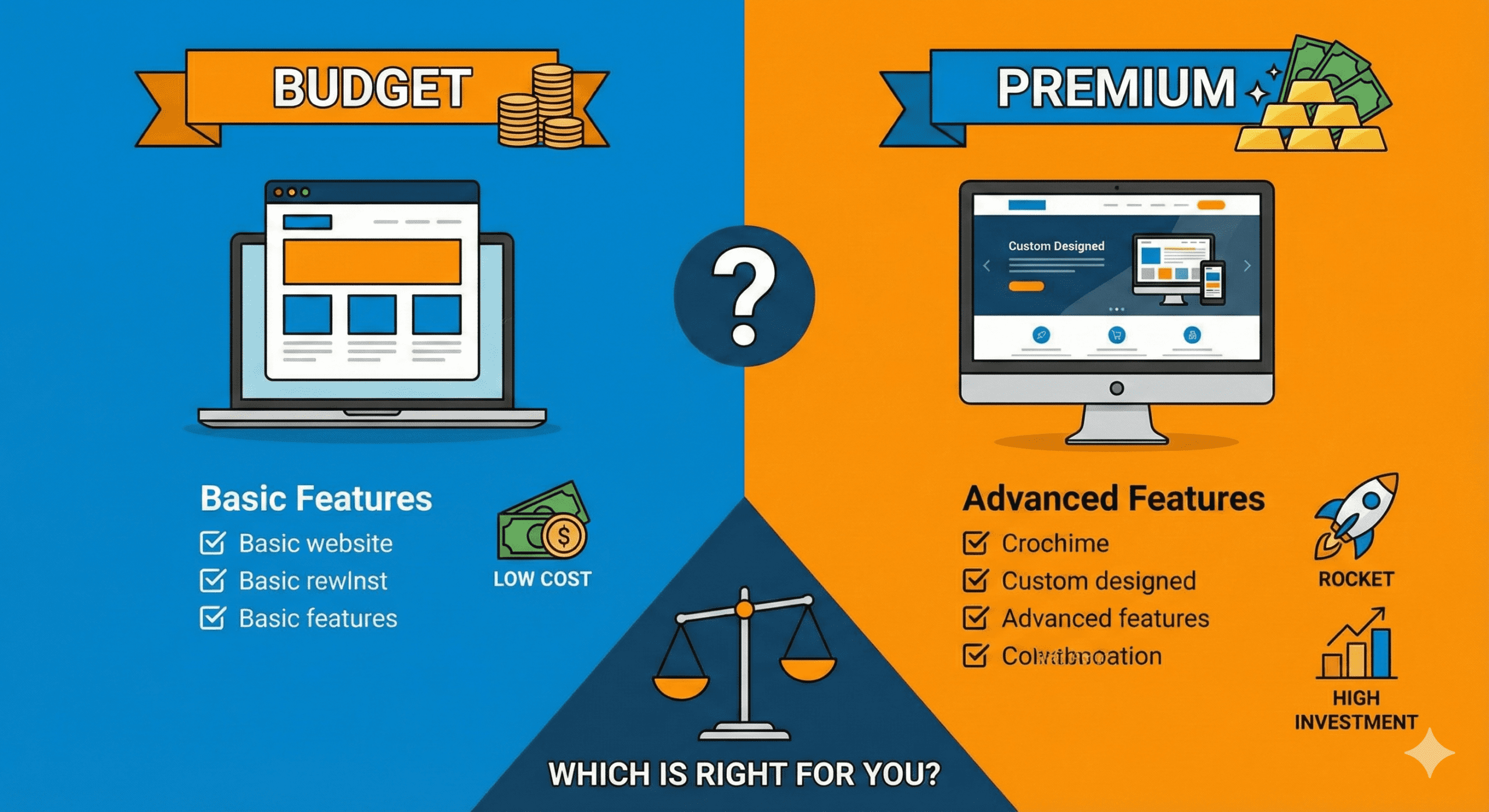
Budget Website vs Premium Website: What’s the Difference?
Deciding between a budget website and a premium website can be challenging. Your website is often the first impression potential customers have of your business, so it’s important to make the right choice. Understanding the key differences in features, functionality, and long-term costs will help you determine which option best suits your needs and budget.
Core Differences Between Budget and Premium Websites
The primary difference lies in the investment of time, resources, and expertise. Budget websites often utilize templates and basic features, prioritizing affordability. Premium websites offer custom designs, advanced functionality, and ongoing support.
Design and Customization
Budget websites commonly rely on pre-designed templates, limiting customization options. This can lead to a generic look and feel. On the other hand, premium websites boast unique designs tailored to your brand identity, ensuring a professional and distinctive online presence.
Image: Website Design Mockup – “Modern website design showcasing responsive layout. Alt text: Clean and modern website design example.”
Functionality and Features
Budget options typically include basic features like contact forms and product listings, but may lack advanced functionality. Premium websites can incorporate e-commerce capabilities, custom integrations, and enhanced user experiences. Consider what functions are essential for your business now and in the future.
Furthermore, scalability is a critical factor. Budget websites often struggle to accommodate growth, whereas premium sites are built with scalability in mind.
SEO and Marketing
While both types of websites can be optimized for search engines, premium websites generally offer more comprehensive SEO capabilities. This includes advanced on-page optimization, schema markup, and keyword research. Budget websites often require additional plugins or manual work for SEO.
Image: Cost Comparison Chart – “Comparison chart outlining the features and costs of budget vs premium websites. Alt text: Budget vs Premium website cost comparison.”
Ongoing Maintenance and Support
Budget websites often require you to handle updates and maintenance yourself, which can be time-consuming and technically challenging. Premium websites typically include ongoing maintenance, security updates, and technical support. This allows you to focus on your business while professionals handle your website.
Cost Considerations
The initial cost of a budget website is typically lower, but hidden costs can arise from additional plugins, customization, or troubleshooting. Premium websites have a higher upfront cost, but can save you money in the long run by including comprehensive features and support. Consider the total cost of ownership, including hosting, maintenance, and updates.
Long-Term Investment
Choosing a premium website is often a better long-term investment. They are designed to adapt to evolving business needs, provide a superior user experience, and ultimately drive more conversions. A budget website, while cost-effective upfront, may require a complete overhaul as your business grows. Think about where you see your business in the next 5 years.
Image: Happy Business Owner – “Business owner smiling confidently, showcasing the impact of a professional website. Alt text: Business owner satisfied with their premium website.”
Conclusion: Making the Right Choice for Your Business
Deciding between a budget website and a premium website requires careful consideration of your current needs, future goals, and budget constraints. While a budget option may seem attractive initially, investing in a premium solution often yields greater long-term returns through enhanced functionality, improved SEO, and dedicated support. Choose wisely, and your website will become a valuable asset to your business.
Frequently Asked Questions (FAQ)
- What is a budget website? A budget website is a cost-effective option typically using templates and basic features, suitable for businesses with limited resources.
- What is a premium website? A premium website offers custom designs, advanced functionality, and ongoing support, providing a professional and scalable online presence.
- Is a premium website worth the cost? For businesses seeking long-term growth, enhanced SEO, and comprehensive support, a premium website is often a worthwhile investment.
- Can I upgrade a budget website to a premium website later? While technically possible, upgrading a budget website can often be more costly and time-consuming than investing in a premium solution from the outset.
- How much does a budget website cost? The cost of a budget website can range from a few hundred to a few thousand dollars, depending on the features and complexity.
- What are the benefits of a premium website? The benefits include custom design, advanced functionality, improved SEO, ongoing support, and scalability.
- Does a premium website guarantee more customers? A premium website provides a better user experience and improved SEO, increasing the likelihood of attracting and converting more customers.
Ready to take your online presence to the next level? Contact us today for a free consultation and discover how a premium website can transform your business! Budget vs. Professional Website: Which is Right for YOU?