
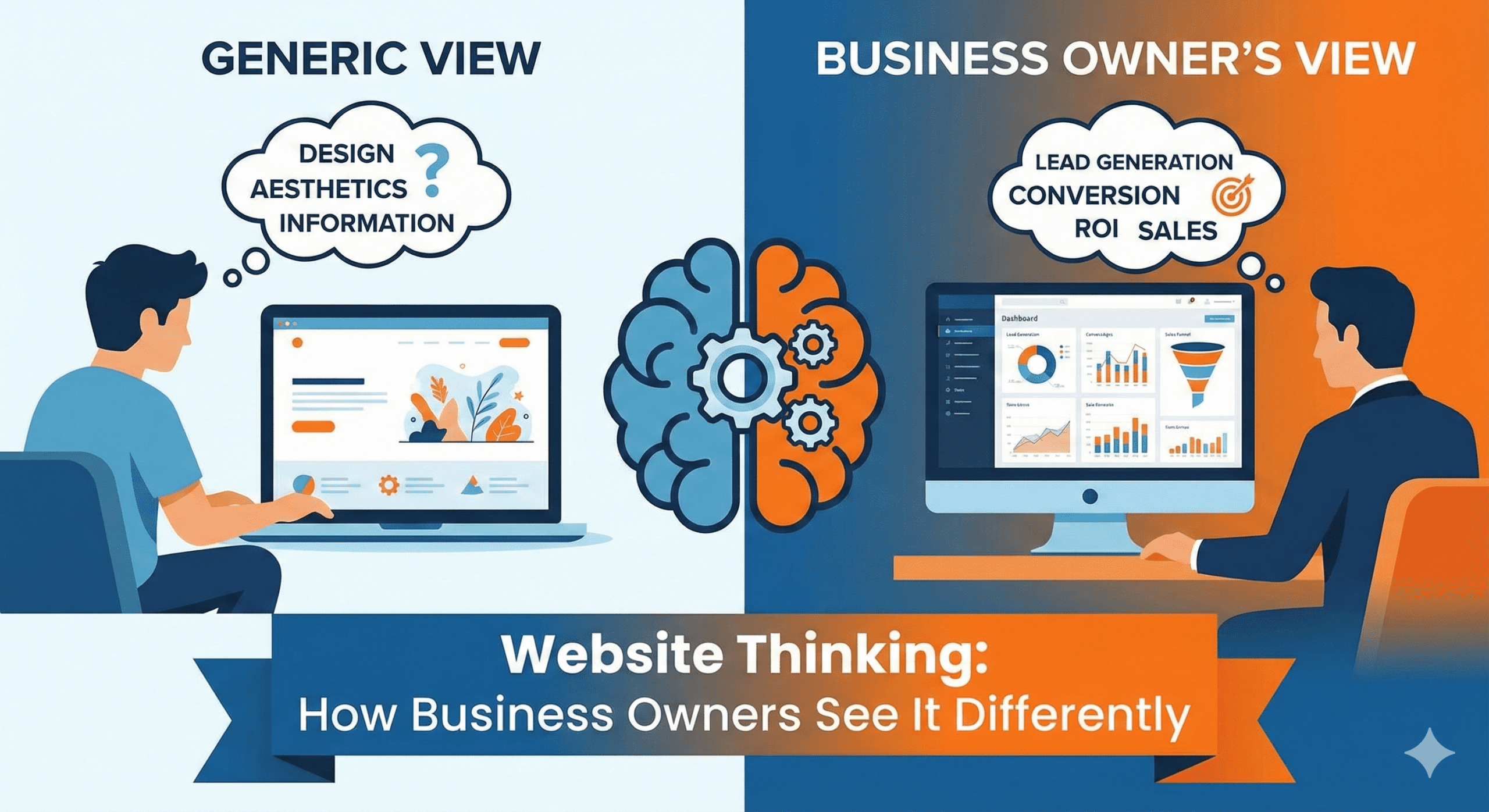
Why Generic Websites Fail in Competitive Markets
In today’s digital landscape, launching a successful online presence is crucial for business growth. Unfortunately, many companies opt for generic websites, unaware of the potential pitfalls and limitations they impose. While seemingly cost-effective upfront, these sites often fail to thrive in competitive markets, ultimately hindering long-term success.
Lack of Differentiation: Blending In, Not Standing Out
One of the primary reasons generic websites struggle is their inability to differentiate a business from its competitors. These sites utilize pre-designed templates and stock images, resulting in a cookie-cutter appearance that lacks originality. Consequently, potential customers struggle to remember your brand or identify your unique value proposition. Therefore, investing in custom branding is crucial.
Limited Customization Options
Furthermore, the limited customization options of generic templates restrict a business’s ability to tailor the website to its specific needs and branding. This can lead to a disconnect between the website’s functionality and the business’s goals.
Poor User Experience: Frustration and Abandonment
Generic websites often prioritize aesthetics over user experience (UX). Navigation can be confusing, loading times slow, and the overall layout may not be intuitive for visitors. As a result, users become frustrated and are more likely to abandon the site, leading to lost leads and sales. A good user experience is very crucial.
SEO Limitations: Difficulty Ranking in Search Engines
Search engine optimization (SEO) is essential for driving organic traffic to your website. Generic websites typically have poor SEO foundations, including poorly optimized code, limited content control, and lack of schema markup. Consequently, they struggle to rank high in search engine results pages (SERPs), making it difficult for potential customers to find your business.
The Importance of Keyword Research
Keyword research is vital for SEO. Without proper keyword integration, generic websites can’t rank for relevant terms.
Security Vulnerabilities: Increased Risk of Cyber Attacks
Generic templates are often widely used, making them a prime target for hackers. The inherent security vulnerabilities in these templates expose your website and customer data to a greater risk of cyberattacks. Choosing a website solution with good security is very important.
Scalability Issues: Inability to Adapt to Growth
As your business grows, your website needs to adapt and scale accordingly. Generic websites often lack the flexibility to accommodate new features, content, or functionality. This can hinder your ability to expand your online presence and reach new customers.
Conclusion: Invest in a Custom Solution for Long-Term Success
While the allure of a quick and inexpensive website solution may be tempting, the limitations of generic websites can significantly hinder your business’s success in competitive markets. By investing in a custom website design and development, you can create a unique, user-friendly, and SEO-optimized online presence that drives traffic, generates leads, and fosters long-term growth. Now is the time to take control of your website.
FAQ About Generic Websites
1. What are the main disadvantages of using generic websites?Generic websites lack differentiation, offer poor user experience, have SEO limitations, security vulnerabilities, and scalability issues.
2. How do custom websites offer a better user experience than generic websites?
Custom websites are designed with the user in mind, offering intuitive navigation, fast loading times, and a mobile-friendly layout.
3. Why are generic websites bad for SEO?Generic websites typically have poor SEO foundations, limited content control, and lack of schema markup, hindering their ability to rank high in search engine results.
4. Are generic websites more vulnerable to security threats?
Yes, because they are commonly used, hackers target generic websites more frequently, which puts them at greater risk.
5. Can a business still be successful with a generic website?
While possible, it’s extremely challenging in competitive markets. Customization offers a significant advantage.
6. What is the most important thing to consider when choosing between a generic and a custom website?
Long-term business goals and the need for differentiation in a competitive market are the most important factors.
7. What are some signs that my current generic website is failing me?
Low website traffic, poor conversion rates, high bounce rates, and lack of customer engagement are all signs of website failure.
Call to Action: Ready to ditch the generic and build a website that converts? Contact us today for a free consultation!