
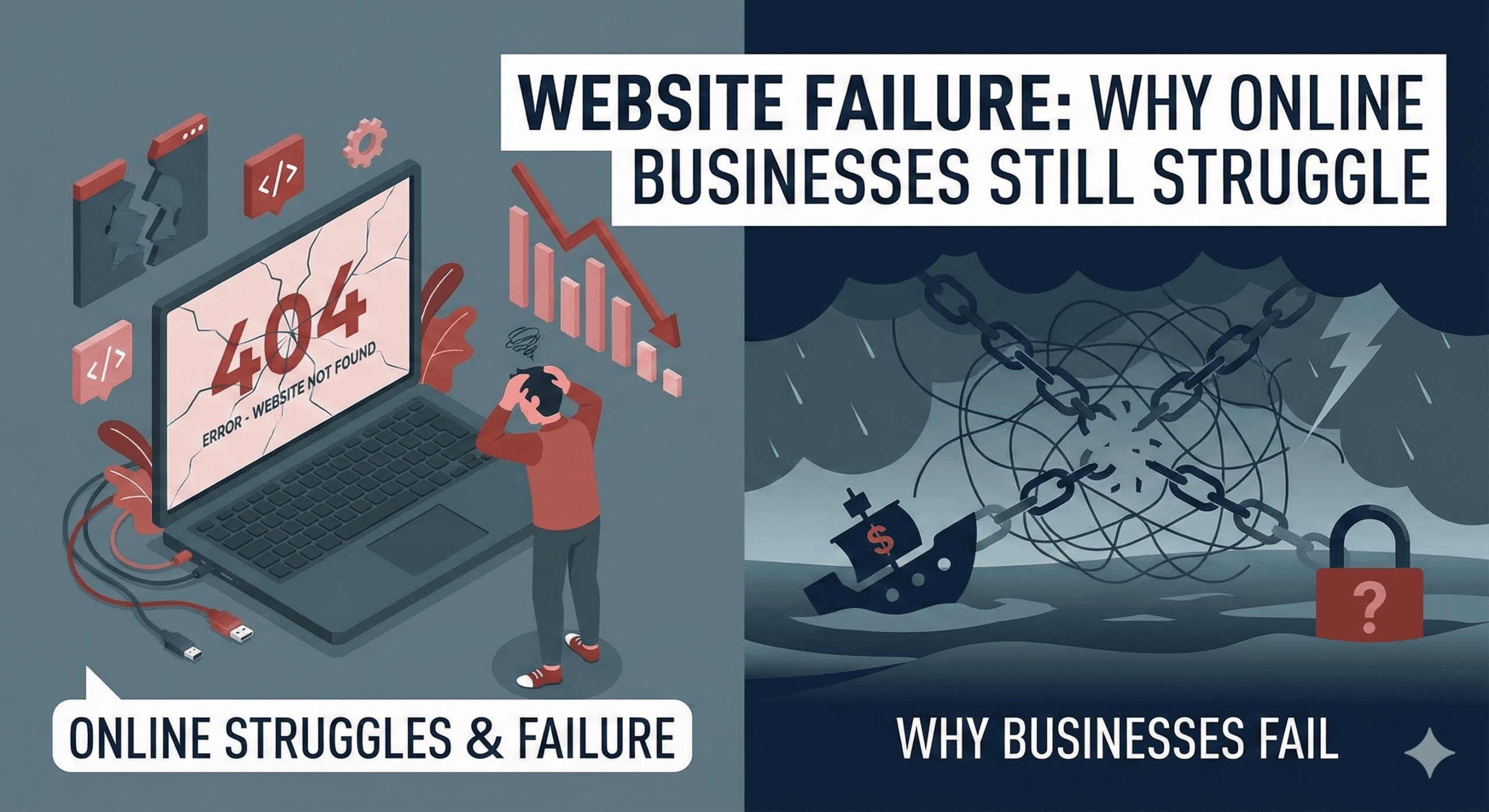
Why Businesses Fail Online Despite Having a Website
It’s a common misconception that simply having a website guarantees online success for businesses. Unfortunately, many companies experience website failure even after investing significant time and resources into their online presence. Let’s explore the reasons behind this disappointing reality and identify steps to prevent it.
Poor Website Design and User Experience
A poorly designed website can be a major obstacle. If your site is difficult to navigate, visually unappealing, or not mobile-friendly, visitors will quickly leave. A confusing user interface and slow loading times contribute to a negative user experience. Consider these factors: Are your images optimized for speed? Is your site easy to navigate on mobile?
Lack of Search Engine Optimization (SEO)
Without proper SEO, your website will struggle to rank high in search engine results. This means fewer people will find your site organically. Invest in keyword research, on-page optimization, and link building to improve your search engine rankings. Effective SEO is crucial for avoiding website failure.
On-Page SEO Optimization
This includes optimizing title tags, meta descriptions, headings, and content with relevant keywords. Remember to write for humans first, search engines second.
Ignoring Mobile Optimization
A significant portion of online traffic comes from mobile devices. If your website is not optimized for mobile, you’re alienating a large segment of potential customers. A responsive design that adapts to different screen sizes is essential. Test your website on different mobile devices to ensure a seamless experience.
Neglecting Content Marketing
High-quality, engaging content is vital for attracting and retaining visitors. Regularly publishing blog posts, articles, and videos can establish your business as an authority in your industry. This content can also improve your SEO and drive more traffic to your website.
Insufficient Website Analytics and Tracking
Without tracking website traffic and user behavior, you’re essentially flying blind. Use tools like Google Analytics to monitor key metrics such as bounce rate, time on page, and conversion rates. This data can help you identify areas for improvement and optimize your website for better results. If you don’t know why visitors leave, you are more prone to website failure.
Not Adapting to Changing Technologies
The online landscape is constantly evolving. New technologies and trends emerge regularly, and businesses must adapt to stay relevant. For example, the rise of AI and voice search has created new opportunities for website optimization. Be open to experimenting with new strategies and tools to keep your website competitive.
Lack of a Clear Call to Action
Your website should have clear and compelling calls to action (CTAs) that guide visitors towards specific goals. Whether it’s signing up for a newsletter, requesting a quote, or making a purchase, CTAs should be prominently displayed and easy to understand.
Why Businesses Fail Online: Conclusion
Ultimately, website failure is often a result of neglecting fundamental principles of web design, SEO, and user experience. By addressing these issues and continuously optimizing your online presence, you can increase your chances of success and achieve your business goals. Don’t let your website become another statistic; proactively work to improve its performance and deliver value to your audience.
Ready to transform your struggling website into a powerful lead generation tool? Contact us today for a free consultation!
FAQ about Website Failure
1. What are the main causes of website failure for online businesses?
The primary causes include poor design, lack of SEO, ignoring mobile optimization, neglecting content marketing, and insufficient website analytics. These all contribute to a higher chance of website failure.
2. How important is SEO in preventing website problems?
SEO is crucial. Without it, your site won’t rank well in search results, limiting organic traffic and potential customers.
3. How can I improve the user experience on my website to avoid website failure?
Focus on creating a user-friendly design, ensuring fast loading times, and optimizing for mobile devices. Also, make sure content is well organized and easy to find.
4. What role does content marketing play in preventing website failure?
High-quality content attracts and engages visitors, establishes authority, and improves SEO, all of which help prevent website failure.
5. What website metrics should I track to identify and address website problems?
Track metrics such as bounce rate, time on page, conversion rates, and traffic sources. This data will highlight areas needing improvement.
6. How often should I update my website to prevent it from becoming outdated?
Regularly update your website’s content, design, and functionality to keep it fresh and relevant. Aim for updates at least quarterly, if not more frequently.
7. Can a lack of clear call-to-actions (CTAs) lead to website failure?
Yes, without clear CTAs, visitors may not know what action to take, leading to lost opportunities and ultimately contributing to potential website failure. Fix a Non-Performing Website | Proven Troubleshooting Guide Why Most Websites Fail in the First 90 Days: A Survival… Website Mistakes Costing You? Fix Them Now! Mobile-First Websites: Generate More Leads Today! Website Mistakes: Stop Losing Business Leads Now!