
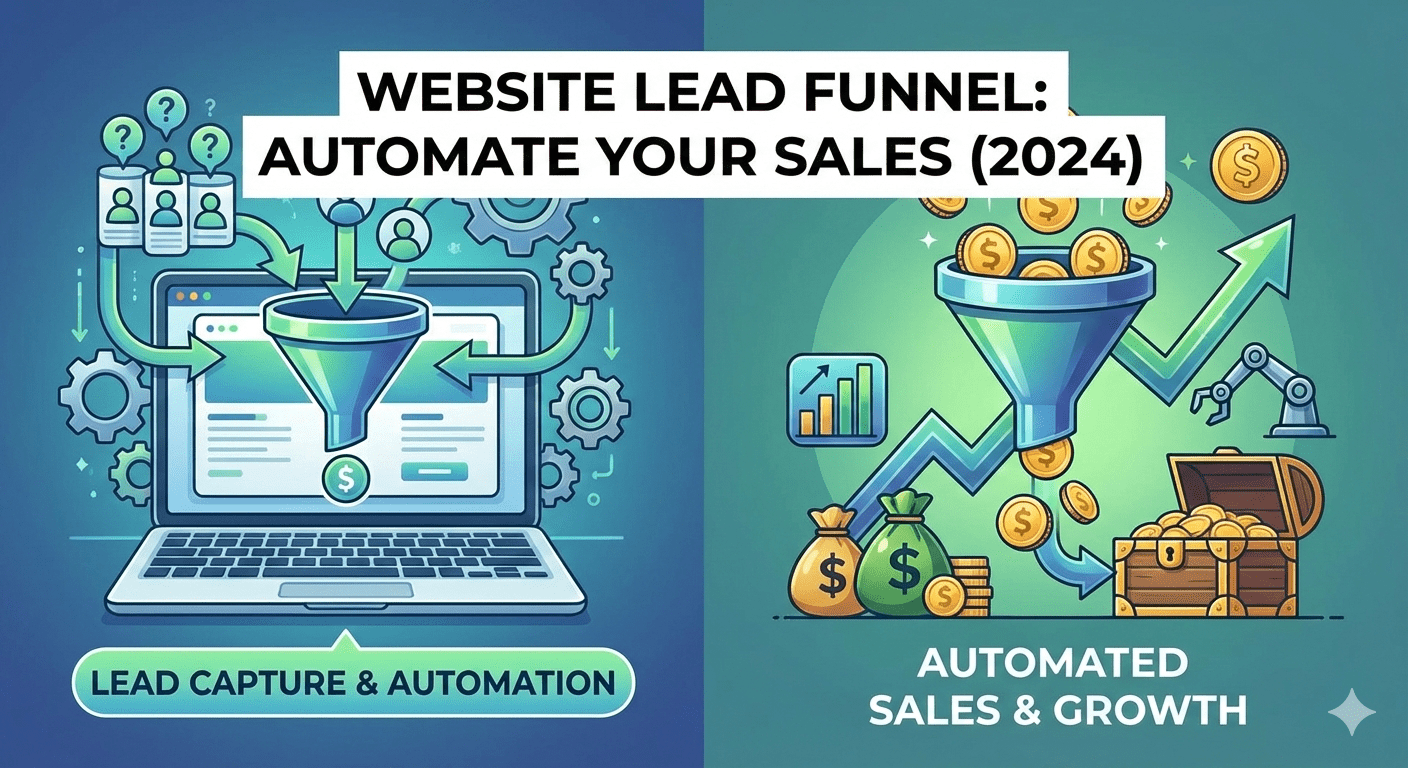
Automated Lead Funnels Using Websites
Your website is a powerful tool, but is it truly working for you? Building an automated website lead funnel is key to converting visitors into paying customers. Instead of passively waiting, you can implement systems that actively capture, nurture, and qualify leads, freeing up your sales team to focus on high-value opportunities. Let’s dive into how you can automate your lead generation process.
What is a Website Lead Funnel and Why Automate?
A lead funnel is the journey a potential customer takes from initial awareness of your product or service to becoming a paying customer. A website lead funnel specifically leverages your website as the central hub for this journey. Automating this process ensures consistent lead nurturing, faster response times, and better lead qualification. In the long run, automation saves time and resources.
Benefits of Automating Your Lead Funnel:
- Increased Lead Generation: Capture more leads through targeted landing pages and forms.
- Improved Lead Qualification: Automatically score and segment leads based on their behavior.
- Enhanced Customer Engagement: Deliver personalized content and nurture leads with automated email sequences.
- Reduced Sales Cycle: Accelerate the sales process by providing leads with relevant information at each stage.
- Better ROI: Optimize your marketing efforts and generate higher returns on your investment.
Setting Up Your Automated Website Lead Funnel
Building an effective automated funnel requires strategic planning and the right tools.
Key Components of a Successful Automated Funnel
A strong funnel combines various digital marketing strategies to effectively capture leads.
Content Marketing is King
Create valuable and engaging content that attracts and educates your target audience. This can include blog posts, articles, videos, infographics, and more. Content should address your ICP’s pain points and offer solutions.
Email Marketing for Nurturing
Use email marketing to nurture leads by providing them with relevant content, personalized offers, and timely updates. Automate your email sequences to deliver the right message at the right time.
Lead Scoring and Segmentation
Implement lead scoring to identify the most qualified leads based on their behavior and engagement with your website and content. Segment your leads based on demographics, interests, and stage in the funnel to deliver more targeted and personalized experiences. This ensures your sales team focuses on the best prospects.
Tools for Lead Funnel Automation
Several tools can help you automate your website lead funnel. Popular options include:
- HubSpot Marketing Hub
- Marketo
- Pardot (Salesforce Marketing Cloud Account Engagement)
- ActiveCampaign
- ConvertKit
These platforms offer features such as landing page builders, email automation, lead scoring, and CRM integration. Choosing the right tool depends on your budget, technical expertise, and specific needs.
Measuring the Success of Your Funnel
It’s crucial to track key metrics to measure the effectiveness of your automated lead funnel. These metrics include:
- Lead Generation Rate: The percentage of website visitors who become leads.
- Conversion Rate: The percentage of leads who convert into paying customers.
- Cost Per Lead (CPL): The cost of acquiring a new lead.
- Customer Lifetime Value (CLTV): The total revenue generated by a customer over their lifetime.
By monitoring these metrics, you can identify areas for improvement and optimize your funnel for maximum performance.
Conclusion: Embrace Website Lead Funnel Automation
Automating your website lead funnel is a game-changer for businesses looking to generate more qualified leads and boost sales. By implementing the strategies and tools discussed in this guide, you can create a well-oiled lead generation machine that drives sustainable growth.
Ready to transform your website into a lead-generating powerhouse? Start building your automated funnel today and watch your business thrive!
FAQ: Website Lead Funnel Automation
A website lead funnel is the process of guiding potential customers through various stages on your website, from initial awareness to becoming a paying customer.
Automation saves time, improves lead qualification, and enhances customer engagement, leading to increased sales and better ROI.
Key components include landing pages, lead capture forms, CRM integration, automated email sequences, and lead scoring.
Popular tools include HubSpot, Marketo, Pardot, ActiveCampaign, and ConvertKit.
Track metrics such as lead generation rate, conversion rate, cost per lead, and customer lifetime value.
Use various content formats to attract different personas and buying cycles. Tailoring the content to be highly relevant for a successful funnel is a must.
While some tools offer free plans, a comprehensive and scalable funnel usually requires investment in paid software and resources.
Ready to build your automated lead funnel and start generating more leads? Contact us today for a free consultation! AI Chatbots: Generate More Leads on Your Website AI for Local Business Lead Generation: Power Up! Website + WhatsApp Automation: Convert Leads Faster! Website & Lead Generation: Your Top Questions Answered