
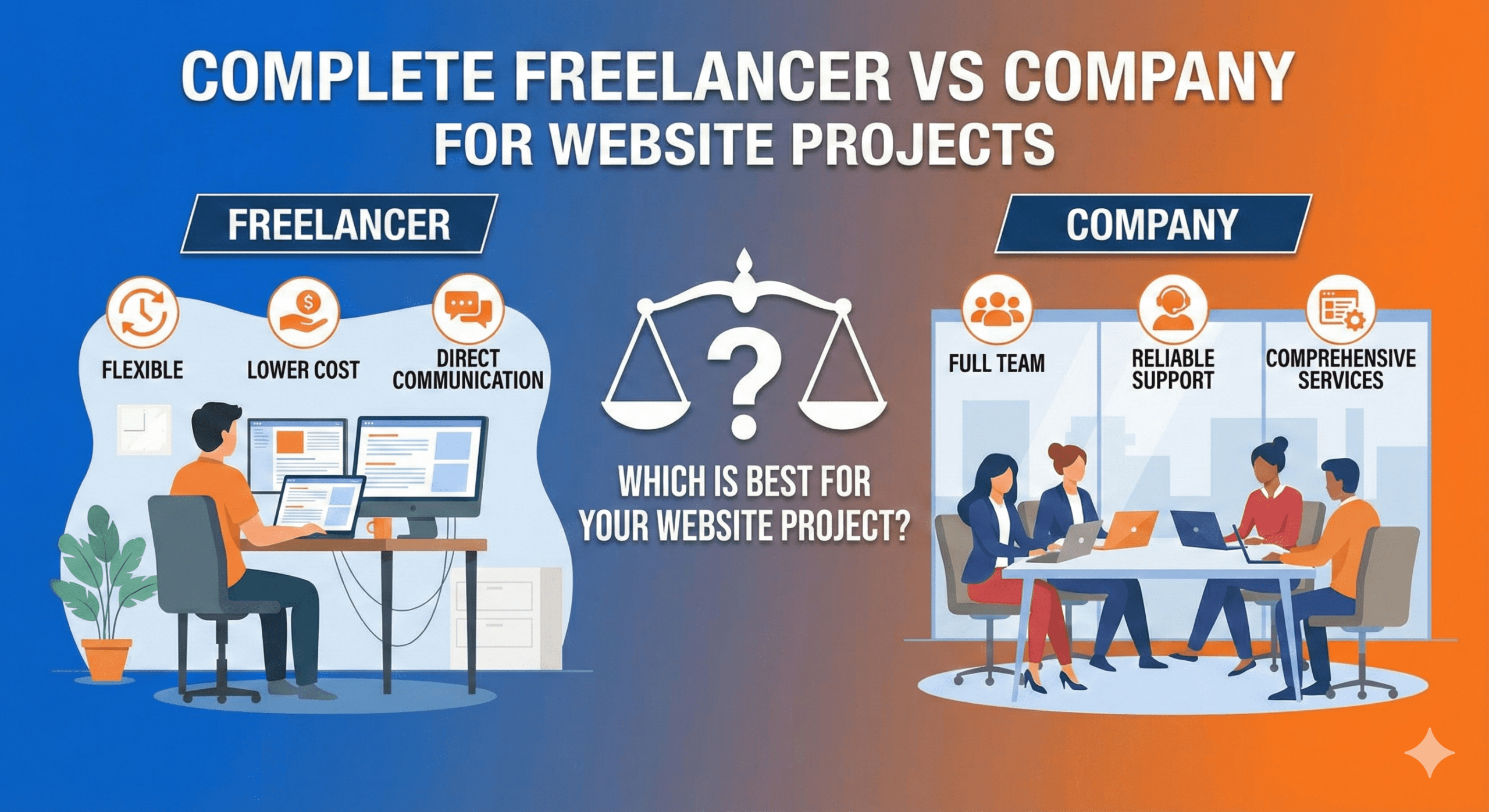
Freelancer vs Company for Website Projects: Long-Term Reality Check
Choosing between a freelancer vs company for your website project can feel overwhelming. Both options present unique advantages and disadvantages, and the right choice depends heavily on your specific needs and long-term goals. Understanding the nuances of each option is crucial for ensuring a successful and sustainable online presence.
Cost Considerations: Upfront vs. Long-Term
Initial cost is often the primary driver in decision-making. Freelancers typically offer lower upfront costs due to lower overhead. However, consider the long-term implications.
Companies might seem more expensive initially, but often provide structured packages that include ongoing support, maintenance, and potential future development needs. This structure can avoid unexpected expenses down the line.
Furthermore, what happens if your freelancer is no longer available? Companies can offer the continuity that a single person might lack.
Skill Sets and Expertise: Breadth vs. Depth
Freelancers usually specialize in a particular area, such as front-end development or graphic design. This deep expertise is beneficial if your project requires a specific skill set. On the other hand, web development companies usually have teams with diverse skills. This broad expertise allows them to handle all aspects of your project, from design and development to marketing and maintenance. Think about your project’s complexity.
Finding the Right Fit: Freelancer or Company?
Finding the perfect freelancer vs company depends on the complexity and scale of your project. Complex, long-term projects often benefit from the structured approach of a company. Smaller, more defined projects may be perfectly suited for a freelancer.
Communication and Project Management
Communication is paramount for any successful website project. Freelancers generally offer direct communication and a more personalized approach. Conversely, companies often have established project management processes, ensuring clear communication, defined timelines, and accountability. They may have dedicated project managers who act as a central point of contact, ensuring efficient workflow.
Long-Term Support and Maintenance
Website development isn’t a one-time event. Websites require ongoing maintenance, security updates, and potential future development. Companies typically offer maintenance packages and long-term support, providing peace of mind. Freelancers might offer similar services, but their availability and long-term commitment can be less certain. Consider a service level agreement.
Scalability and Growth
As your business grows, your website may need to scale accordingly. Companies are often better equipped to handle scalability, offering the resources and expertise to adapt your website to changing needs. Freelancers might be limited by their individual capacity.
Legal and Contractual Considerations
Working with a company often provides more robust legal and contractual frameworks. Companies have established contracts that protect both parties. Freelancers may or may not have formal contracts, potentially leading to ambiguity and disputes.
Making the Right Decision: Weighing the Options
Ultimately, the best choice between a freelancer vs company depends on your unique requirements, budget, and long-term vision. Weigh the pros and cons of each option carefully, considering factors such as cost, expertise, communication, support, scalability, and legal considerations. A thorough analysis will lead you to the solution that best suits your needs.
FAQ: Freelancer vs Company for Your Website
1. What are the main differences between hiring a freelancer vs company for web development?
The key difference lies in scale and support. Freelancers typically offer lower initial costs and personalized service, while companies offer broader expertise, structured project management, and long-term support.
2. When is it better to hire a freelancer for a website project?
Freelancers are ideal for smaller, well-defined projects with specific skill requirements. For example, simple brochure sites or landing pages.
3. When is it better to hire a company for a website project?
Companies are better suited for complex, long-term projects that require a diverse skill set, ongoing maintenance, and scalability. Enterprise level websites are a great fit.
4. How can I ensure good communication when working with a freelancer or company?
Establish clear communication channels, set expectations for response times, and document all decisions and requirements.
5. What are the cost considerations when comparing a freelancer vs company?
Consider not only the upfront cost but also long-term maintenance, support, and potential future development expenses. Companies often package this into monthly contracts.
6. How does the long-term support differ between a freelancer vs company?
Companies generally offer more reliable and structured long-term support, whereas freelancer support can be dependent on their availability.
7. What should I look for in a contract when hiring a freelancer or company?
Ensure the contract clearly defines the scope of work, payment terms, timelines, intellectual property rights, and dispute resolution processes.
Conclusion: Secure Your Website’s Future
Choosing between a freelancer and a company for your website project is a critical decision that significantly impacts your long-term success. By carefully considering your specific needs, budget, and desired level of support, you can make an informed choice that sets you up for sustainable online growth. Evaluate your options thoughtfully to guarantee you get the best value. Need help evaluating your website needs? Contact us today for a free consultation!