
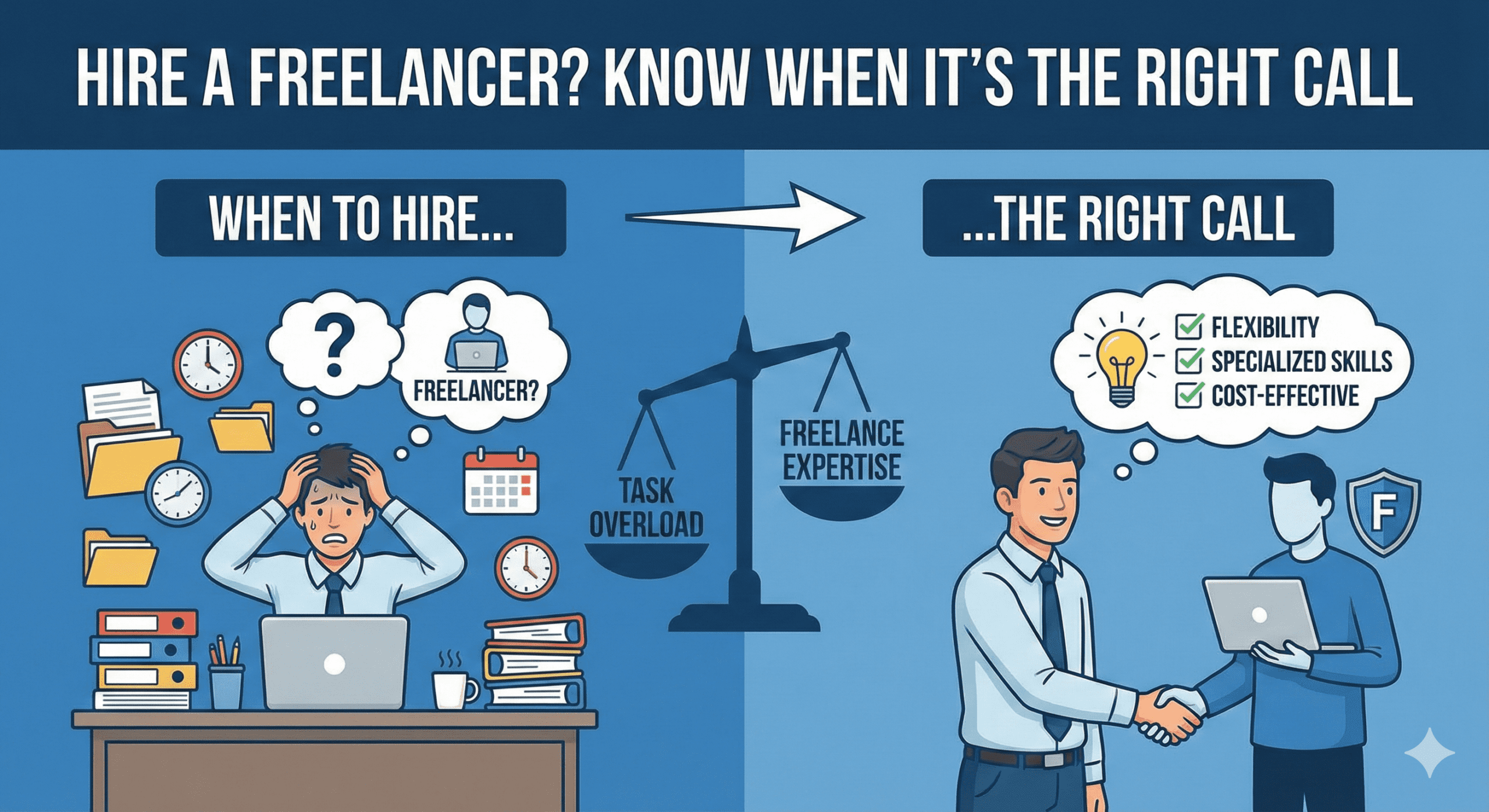
When Hiring a Freelancer Makes Sense (And When It Doesn’t)
Knowing when to hire a freelancer versus relying on your existing team is crucial for efficient project management and business growth. Many organizations find themselves at a crossroads, needing specialized skills or extra bandwidth without the commitment of a full-time employee. This article will guide you through the key considerations to make the right decision.
Understanding Your Needs: Can a Freelancer Fill the Gap?
Before jumping into the freelance pool, thoroughly analyze your project requirements. Do you need a highly specialized skill for a short-term project? Or is it an ongoing task that could eventually justify a full-time position? Defining your needs accurately helps determine if a freelancer is truly the best solution. Think about the time commitment, required expertise, and budget constraints.
Situations Where You Should Absolutely Hire a Freelancer
There are scenarios where hire a freelancer should be a no-brainer. Consider these instances:
- Specialized Skills: Need a specific skill, such as SEO optimization, mobile app development, or graphic design, that your current team lacks? Freelancers offer access to niche expertise.
- Project-Based Work: Short-term projects with defined scopes are ideal for freelancers. You only pay for the services you need, and you’re not burdened with long-term employment costs.
- Scaling Up Quickly: Need to ramp up your team quickly to meet a deadline or handle increased workload? Freelancers provide a flexible and scalable solution.
- Cost-Effectiveness: Often, paying a freelancer for a specific project is more cost-effective than hiring a full-time employee, considering salary, benefits, and overhead.
When Hiring a Freelancer Might Not Be the Best Idea
However, sometimes outsourcing isn’t the answer. Consider these points:
- Highly Confidential Information: If your project involves extremely sensitive data, entrusting it to an external party might pose a security risk.
- Requires Deep Company Knowledge: Projects requiring extensive understanding of your internal processes and culture might be better suited for internal teams.
- Strict Regulatory Compliance: Industries with stringent compliance regulations may require in-house personnel to maintain control and accountability.
- Long-Term Strategic Roles: For roles essential to your long-term strategic goals, building an in-house team provides more stability and control.
Ensuring Success: Effective Freelance Management
If you decide to hire a freelancer, proper management is key. Clear communication, well-defined project scopes, and realistic deadlines are essential. Use project management tools to track progress, provide feedback, and ensure the freelancer stays on track. Establish clear payment terms and a process for resolving disputes.
Legal Considerations and Contracts
Always have a written contract outlining the freelancer’s responsibilities, deliverables, payment terms, and intellectual property ownership. Consult with legal counsel to ensure the contract complies with relevant laws and protects your interests. This will help you avoid future headaches and ensure a smooth working relationship.
Conclusion: Making the Right Choice for Your Business
Deciding whether to hire a freelancer depends on careful consideration of your needs, project requirements, and risk tolerance. By weighing the pros and cons, you can make an informed decision that optimizes your resources and drives your business forward. Understanding these dynamics is key to making the right staffing choice.
FAQ: Hiring a Freelancer
- When should I hire a freelancer instead of a full-time employee? Hire a freelancer for specialized skills, project-based work, or when you need to scale quickly.
- What are the benefits of hiring a freelancer? Cost-effectiveness, access to niche expertise, and flexibility are key benefits.
- How do I find reliable freelancers? Utilize online platforms like Upwork, Fiverr, or Toptal, or ask for referrals from your network.
- What should be included in a freelance contract? Scope of work, payment terms, deadlines, and intellectual property ownership.
- What are the potential downsides of hiring a freelancer? Communication challenges, potential security risks, and difficulty integrating them into company culture are potential downsides.
- How can I effectively manage a freelancer? Set clear expectations, provide regular feedback, and use project management tools.
What’s the best way to determine if I should hire a freelancer*? Conduct a thorough needs assessment, considering your budget, project scope, and required expertise.
Ready to take the next step? Explore our guide to effectively managing freelance teams and optimizing your project outcomes! [Link to relevant internal resource/blog post]